

Medway Access & Rescue carried out blade repair and leading edge protection (LEP) application on offshore wind turbines, working by rope access directly on the blades. The works included a thorough examination of each blade and a check of its lightning protection system (LPS).
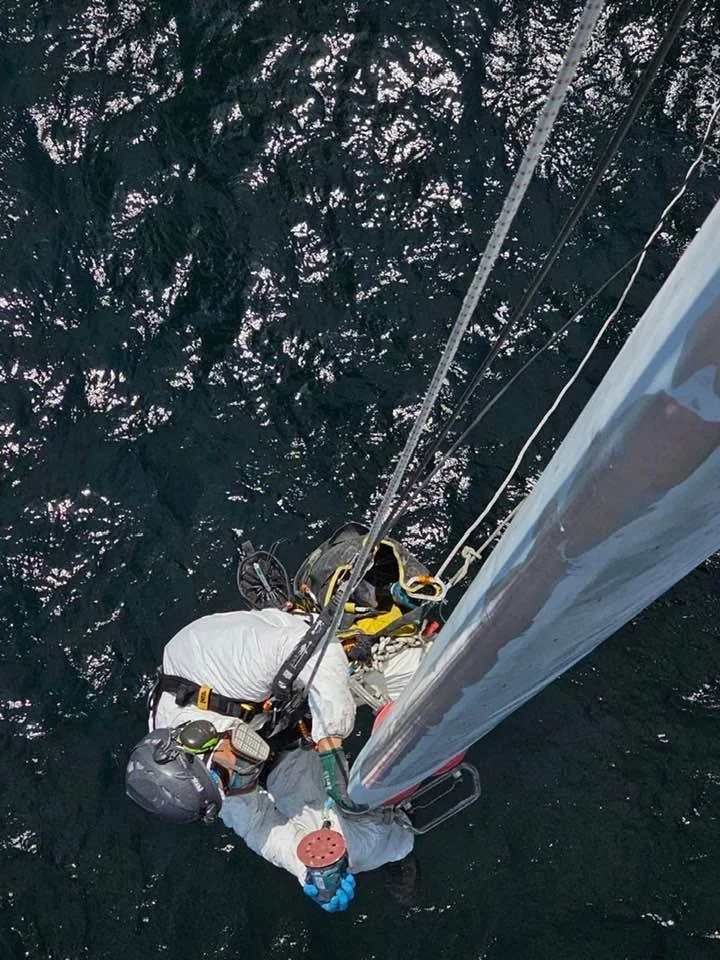
Support Services Provider: Medway Access & Rescue
Client: Offshore wind client (name withheld)
Services Provided: Blade repair, leading edge protection (LEP) application, blade examination, lightning protection system (LPS) check by offshore rope access
Project Location: East Coast of England Wind Farm
Sector: Offshore wind energy
Objectives:
Examine each blade thoroughly and check the lightning protection system (LPS).
Repair damage to the blades and restore their surface.
Apply leading edge protection to extend the life of the blades.
Project Overview
Medway Access & Rescue carried out blade repair and leading edge protection (LEP) application on offshore wind turbines, working by rope access directly on the blades. The works included a thorough examination of each blade and a check of its lightning protection system (LPS).
A blade’s leading edge takes a constant beating from rain, salt and wind. Left alone, small areas of damage grow and shorten the life of the blade. Repairing the damage and applying a protective LEP coating restores the surface and helps the blade last longer. Checking the LPS is a vital and often overlooked step: it helps keep blades operational for longer and maximises the efficiency of the asset.
Equipment and Resources Involved
A team of IRATA-qualified rope access technicians working from ropes directly on the blade.
Rope access equipment, sanding equipment, repair materials and LEP coating, with respirators, coveralls, gloves, helmets and hearing protection.
Risk Assessment and Controls
The main risks of working on a blade over open sea, and how they were managed.
| Activity | Hazard | Control Measures |
|---|---|---|
| Working at height offshore | Fall from height over open sea | IRATA-qualified rope access technicians working on rope access systems with full harness and back-up protection |
| Blade surface preparation and repair | Dust and particles from sanding, and coating materials | Respiratory protective equipment, disposable coveralls, gloves and eye protection worn throughout |
| Tools in use at height | Dropped objects and tool handling on the blade | Tools secured to the technician and managed throughout the work |
| Offshore conditions | Wind, sea state and exposure | Work planned around the conditions, with technicians wearing helmets and hearing protection |
Methodology
Planning and access: the work was planned around the conditions and the blades accessed by rope.
Examination: the blade was thoroughly examined and its lightning protection system (LPS) checked.
Preparation and repair: damaged areas were sanded back and repaired to restore the blade’s surface.
LEP application: leading edge protection was applied to protect the blade against future erosion.
Completion: the finished work was checked before the team came off the blade.
Outcomes
Blades thoroughly examined and the LPS checked, helping them stay operational for longer.
Damaged blade surfaces repaired.
Leading edge protection applied to extend the life of the blades.
Work completed offshore by rope access, directly on the blades.
Conclusion
Repairing blades early, protecting the leading edge and checking the LPS costs far less than replacing a blade. This project shows how rope access technicians can do that work offshore, safely and efficiently, and help owners get more life from their turbines.
Need wind turbine blade repair or LEP work?
Talk to Medway Access & Rescue about offshore blade repair, LEP and LPS checks.